Showing posts with label gd8. Show all posts

Oct 4, 2010

Changing Page Properties - GeoDocs 8

There are many reasons you may want to change a page's properties.   You want to move a page, or change the title, or switch to a different template.  That's all in the Page Properties.  You must have the role of 'site author' in the group that owns the page in order to change page properties or publish the page.  If your site uses workflow you may also need to be a workflow approver to complete this process.
  1. Log in 
  2. Click the PAGE button in the toolbar, then select 'View Page Properties' in the dropdown menu.  A popup will appear, with information organized on three tabs.  
  3. Make the property change (more detail below)
  4. Click SAVE.  The popup will close.
  5. Go back to the PAGE button in the toolbar and in the dropdown menu, either click 'Publish' if you don't have workflow, or 'Workflow < Submit' if you do have workflow.  (an approver will then need to go to the page menu and select "Workflow < Approve")

Page Menu in GeoDocs without Workflow
Where to change the properties?

First tab: Describe this page
  • Change the page title - on the first tab, type in the new name.  
  • Change the page name that appears in menus - change the page 'caption' on the first tab.
  • Make a page private or public - check or uncheck the 'Public' box.  If the box is unchecked (non-public) then only users in the owning group can see it and only when they're logged in.
  • Turn off or inactivate a page - uncheck or check the 'Active' box.  Inactive pages can only be seen by site authors while logged in and if they're a member of the group that owns the page.  
  • Change page description - the 'Meta Data' field may feed the page's HTML description.  This depends on how the page template is designed.
  • Change metadata for search engine optimization (SEO) - Again, the 'Meta Data' field on the first tab. 
Second tab: Where does the page belong on this site?
  • Move a page to a new location in the sitemap - select the middle tab and simply highlight the page that you want this page to go UNDER.  
Third tab: Images
  • Change the banner image on a page.  (Not all templates are designed to do this.)  - use the link selector tool to choose a new document (image) for the banner.  Note that only files cropped at exactly the right dimensions will work, not just any image in the system.
Page Properties Pop-up Window - click to enlarge

Page Structure in GeoDocs

GeoDocs uses three levels of structure on a page:

  1. PAGE - the page properties include which template to apply, the name of the page, and where it should be located in the site.  Only site authors can change page properties, or delete or create pages.
  2. SECTIONS and MENUS - these are like frames for content and links.  Only site authors can add or remove sections/menus or make changes to their properties.
  3. CONTENT - text, links, calendar entries, etc. And sometimes documents.  Document authors can create, delete, or change properties of file-based content.  Content authors can create, delete, and change content of any kind.  

Sep 30, 2010

Moving a Document in GeoDocs 8

  1. Click on FILES in the GeoDocs toolbar.
  2. Navigate to the document to be moved.
  3. Click the document file name, and choose 'Edit' in the dropdown menu.
  4. In the window that appears, there are tabs at the top. Go to "Where does the document belong?". The current location will be highlighted.
  5. Navigate through the folders and highlight the folder where the document should go.
  6. At the bottom, click Save or Check In or Submit to Workflow (Enterprise Only).
  7. Follow the appropriate steps to publish the document.
  • Save, then Check In, then Publish (or Submit to Workflow then Approve)
  • Check In, then Publish (or Submit to Workflow then Approve)
  • Submit to Workflow, then Approve.

Note: if you click Cancel your document will remain checked out. If you do not wish to make changes at this time, find the document in Document in Explorer. Click to show the menu and select Undo Checkout to check it back in with no changes.

Document Properties in GeoDocs 8

 Documents can carry many properties in GeoDocs 8.  To see the properties of a document:

In the top toolbar, click "FILES" to open Document Explorer
Navigate to the file you want to investigate
Left-click on the file name.  In the dropdown that appears, choose the last option "View Content Properties"

The popup window that appears shows properties.  Click the tabs at the top to see more.

CONTENT DETAILS Tab
  • Topics - any piece of content must have at least 1 topic assigned
  • Metadata (free form information that can be used to improve search engine rankings or just simply describe the document to help other users)
  • Group Owner 
  • Status: Active/Inactive and Public/Non-public
  • Start and End Date (to set limits on when the document is available to site visitors)
  • Priority (may be used for subscriptions/alerts or to sort lists of documents)
  • Send Next (if this box is checked, the next time a new version of the document is published, the system may send emails to notify users if they are subscribed to receive such alerts)
SECURITY Tab
  • Content ID
  • Created Date
  • Created By (user)
  • Modified Date
  • Modified By (user
CONTENT HISTORY Tab
  • If you have document versioning turned on, you will see a list of all prior versions of the document.  Click 'view' on the far right column to open older versions.  

To change a document's properties, such as topics or group ownership, you must first 'check out' the document and THEN view its properties.  When the document is checked out to you, there will be a SAVE button at the bottom of the Properties window.

Alternative Route:
If you are in the group that owns a document, you can also see and edit a document's properties if you click on the file name and choose EDIT.  This will open the above mentioned tabs, as well as a tab that will allow you to change the location of the document or upload a new version. 

Aug 27, 2010

Adding a section to a page - GeoDocs 8

To add sections to a page, you must be assigned the role of "Site Author" in the group that owns the page.

  1. Click on EDIT mode (top toolbar)
  2. Mouse over the geodes to identify the right kind: Menu or Section.  Geodes will only work for one or the other and can't be switched.  This maintains consistency in page layout.
  3. Click on a geode and choose 'Section > New Section'
  4. Choose a caption (depending on the template, this may or may not appear on the page, but you will use this name to find the section if you reuse it on another page)
  5. Choose a template
For static templates, you will only use the first tab, so you're ready to save.

For dynamic templates, two more tabs will become active.
  •  Dynamic Filter: choose groups and topics to filter content
  •  Display Window:  choose priority, date range and other options (Calendar sections will also allow filtering by event date)

6.  Save the section
7.  Publish the page

Related posts:
Page structure in GeoDocs

Adding a menu to a page - GeoDocs 8

To add menus to a page, you must be assigned the role of "Site Author" in at least one group.

1.  Click on EDIT mode (top toolbar)
2.  Mouse over the geodes to identify the right kind: Menu or Section.  Geodes will only work for one or the other and can't be switched.  This maintains consistency in page layout.
3.  Click on a geode and choose 'Menu > New Menu'
4.  Choose a caption (depending on the template, this may or may not appear on the page)
5.  Choose a template
6.  Save
7.  Publish the page

Create a new page or copy an existing page - GeoDocs 8

To create a page or to add sections or menus to a page, you must be assigned the role of "Site Author" in at least one group.

To create a new blank page (no menus or sections):

  1. Click the EDIT mode button
  2. Go to PAGE <  New Page
  3. Give the page a title, caption, and unique name
    • Title:  most websites follow the convention of "page name - site name" (eg - "US Politics - The New York Times")
    • Caption: this is what will show in menus
    • Unique name:  this will become the end of the page URL and can only be used once in the system
  4. Choose other options, such as page template, public or private, etc.
  5. On the next tab, navigate to choose a location for the page.  It will appear as a sub page (or child) of the highlighted page
  6. Save the page - you will see a page with just the background images and geodes at all locations available to add menus or sections.

To make a page with the same menus as another page, you can start this process by navigating to a page with the same menus you want, then choose PAGE < COPY and complete the other steps.   You will create a copy of the page, but with no sections.  If you have several menus on the page this can save a lot of time.

Aug 11, 2010

The GeoDocs 8 Toolbar

Once logged in, users will see a toolbar that floats at the top of the screen.

Site Author and Content Author toolbar: (full toolbar) includes Page, Files, Status, Edit/Preview/Live, RSS Builder, Site Tools, Change Password, User Name, and Logout button.


Document Author Toolbar: omits the Status field, does not have Edit/Preview/Live or RSS Builder buttons.
The Member Toolbar only has two buttons: Logout and Change Password.

The features available on the toolbar are based on the highest role the user has in any group, so if a user is just a Member in one group but a Site Author in another group, that user will see the full Site Author toolbar. Certain options in the Page menu dropdown will be greyed out for Content or Document Authors, such as 'Delete Page'.

(More about User Roles)

Page Button : Opens dropdown menu of page options including New, Open, Copy, Delete, Publish, Workflow, and View Properties. Only a Site Author will have access to the complete menu, and only while in Edit Mode. (More about Pages and Site Authors)


Files Button: Opens the Document Explorer for file management including upload, edit properties, and view versions (Enterprise License only). (More about Document Explorer)


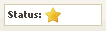
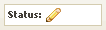
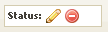
Status Icons

Gold Star: Everything on the page has been published and is live on the site. (Preview and Live modes match)


Pencil: Something has been edited since the last published version. This could be new/changed content, section, menu, or page. This icon will also display if the page has never been published.


Pencil with Red Circle: Either the page or a piece of content has been marked for deletion. (Deletion is completed when the page or content is published)


Edit/Preview/Live: Allows Content Authors and Site Authors to view the page in three different 'modes' for editing, previewing changes, and viewing the live site.


RSS Builder: Opens a popup window that guides users through creating an RSS feed based on content author groups, topics, and other parameters and provides a URL to the RSS feed. (Future post: More about RSS Builder)


Site Tools: Opens a new browser tab to view other administrative features, such as user administration, topic administration, and Site Map controls. (Future post: More about Site Tools)

Aug 3, 2010

About Document Explorer – GeoDocs 8

All document formats are supported as well as images, audio, video and/or presentation formats, including all MS formats. They can be easily implemented into a web page or linked to a file to be opened separately. Non-technical users with security rights can add, edit, assign or un-assign files.

Documents are treated just like any other content type in GeoDocs, but with a few key differences:

How documents are the same as other content types:

  • Security: can be public or private
  • Editing Access: properties edits or uploading of new versions can be restricted to certain user groups
  • Properties such as topics and display date ranges allow dynamic delivery in sections, RSS feeds, or subscriptions
How documents are not like other content types:

  • Documents themselves are not edited directly in GeoDocs (but their properties are) and the EDIT screen is a bit different
  • Every document has its own unique URL
  • Document Explorer: documents are uploaded and organized through this special user interface
  • Documents can be included within Basic (text) content as a link or an image

  • Edit/Preview/Live modes are not used to view changes to documents and won't change the view within Document Explorer


Accessing Document Explorer from the toolbar:

The most direct way to access Document Explorer is via the GeoDocs toolbar at the top of your screen. Click on the button marked Files. (the toolbar will appear differently based on your role – 'Members' will not see this button in their toolbar)
Note: It doesn't matter which mode (edit/preview/live) you are in before opening Document Explorer. This function doesn't apply here.

The Files button will open a large pop-up window showing the root folders on the left. Single left clicks will open each folder to drill deeper.


Folders

The folders seen in Document Explorer are only used to organize them for authors, and are not a mechanism for delivery on the website or intranet. Documents are delivered to visitors by direct links, dynamic sections (topics or date range), or as images within content. Folders are only seen by authors who have access to them. Folders don't influence security – it is possible to have a private document in a public folder, or vice versa.

Each group in GeoDocs automatically gets a root folder of the same name. By default, GeoDocs starts with two groups, and thus two folders: Administrators and Public. Users can see only the folders under the groups they belong to. For example, if user Tim123 is a "document author" in the Administrators group, a "member" of the Public group, and is not in the Human Resources group, he will see only the Administrators and Public folders, will be able to add/delete/change documents only in the Adminstrators folder, and will see no evidence that a Human Resources folder exists.

Create NEW folder – click the icon that looks like a folder with a green plus sign (mouseover text is "Create Folder")
Folders will default to be owned by the group that owns the Root folder (any folders created under PUBLIC will default to be owned by group PUBLIC) but can be changed so that one group could own a folder under another group's root folder.